
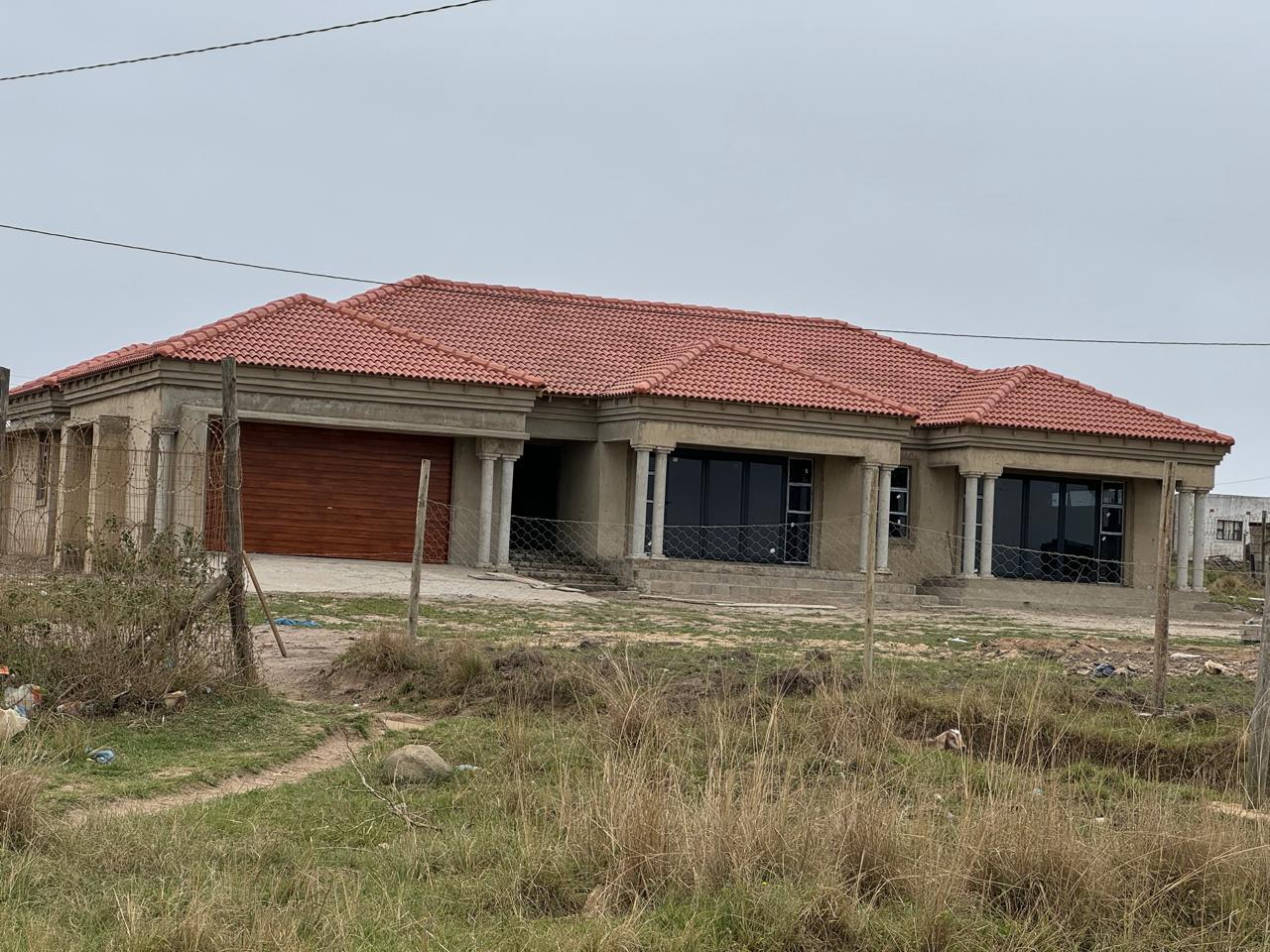
Walk through any Western Cape town and you will see every kind of roof: concrete tiles in the northern suburbs, metal sheeting on West Coast and farm buildings, clay tiles in the Winelands and thatch on Cape Dutch homes and lodges. Each covering changes how your roof trusses are designed and what your roof costs. Here is how to choose.
Why the covering matters for your trusses
The covering decides the weight the trusses carry, how far apart they can be and how steep the roof must be. Under the deemed-to-satisfy rules in SANS 10400-L:
| Covering | Maximum truss spacing | Typical pitch range |
|---|---|---|
| Concrete or clay tiles | 760 mm | 17.5° to 35° |
| Metal tiles | 1,000 mm | 15° to 30° |
| Metal or fibre-cement sheeting | 1,200 mm | 15° to 30° |
| Thatch | Own structural system | Usually 45° or steeper |
That is why it pays to choose the covering before the roof is designed. Changing later can mean a full redesign.
Concrete roof tiles
Good for: most suburban homes across the Cape metro and Boland.
- Affordable and widely available in many profiles and colours.
- Do not rust, which suits coastal suburbs.
- Their weight helps resist wind uplift, though they must still be clipped as specified in exposed areas.
- Need trusses at 760 mm centres or closer, so more trusses than a sheeted roof.
Clay roof tiles
Good for: Winelands and Mediterranean-style homes where longevity and looks matter.
- Very long-lasting and colourfast.
- Heavier than many concrete tiles, so trusses are designed for the extra load.
- Usually a premium price.
Metal sheeting
Good for: modern homes, West Coast and farm buildings, carports, warehouses and low-pitch roofs.
- Light, so fewer trusses are needed and spans can be economical.
- Suits contemporary designs and low pitches.
- Near the sea, the coating and fixings must be specified for marine exposure. See coastal roofs in the Western Cape.
- Relies on correct fixing to resist wind. See roofs and the Cape wind.
Thatch
Good for: Cape Dutch, farm and lodge styles where character is the priority.
- Thatch needs a steep pitch, usually 45° or more, to shed water.
- It is built on a structure designed specifically for thatch, and should be installed by a specialist thatcher.
- Fire safety is regulated under SANS 10400-T, including distances from boundaries, and fire-retardant systems may be required depending on size and position.
- Thatch needs regular maintenance and can affect insurance.
How to decide
| If you want… | Consider |
|---|---|
| The lowest roof cost | Metal sheeting or concrete tiles |
| A classic suburban look | Concrete tiles |
| Maximum longevity | Clay tiles |
| A modern, low-pitch design | Metal sheeting |
| A seaside home with little metal to corrode | Concrete or clay tiles |
| Cape Dutch character | Thatch, with a specialist thatcher |
Our designers can price your roof with more than one covering so you can compare. Our roof truss price guide explains how the covering affects cost, and our Cape Town guide covers local lead times and delivery.
One order for the whole roof
Our Cape Town plant supplies tiled and sheeted roof coverings and all the sundries with your trusses, so the whole roof comes on one order. Our crews can also install and certify the roof. See roof coverings and installation.
Frequently asked questions
Which roof covering is cheapest in the Western Cape?
Metal sheeting usually works out cheapest once you include the extra trusses a tiled roof needs. Concrete tiles are close behind and remain the most common choice for homes.
Which roof is best for a house near the sea?
Concrete and clay tiles do not corrode, so they suit coastal sites. Metal sheeting also works if its coating and fixings are specified for marine exposure.
Can I change from sheeting to tiles later?
Only if the trusses were designed for tiles. Tiles are heavier and need trusses closer together, so check with a truss designer first.
What pitch does a thatch roof need?
Thatch usually needs a pitch of about 45° or steeper to shed water and last.
Price your roof with your chosen covering
Send your plans to our Cape Town plant and tell us which covering you are considering. We will design the roof for free and give you an itemised quote. Or visit the Western Cape branch page.
