
Much of the Western Cape lives close to the sea, from the West Coast and the Atlantic Seaboard to False Bay, the Overberg and the Garden Route. Coastal living is wonderful, but salt air, humidity and wind-driven rain are hard on roofs. Here is how to make sure your roof trusses, fixings and covering last on a coastal site.
What the coast does to a roof
- Salt corrodes metal. Airborne salt settles on fixings, nail plates, straps, flashings and sheeting. The closer you are to breaking surf, the faster it works.
- Damp feeds decay and insects. Moist air and condensation in the roof space create the conditions wood borer and fungal decay prefer.
- Wind drives rain sideways. Winter storms push water under poorly lapped coverings and into the roof space.
None of this means you cannot build a durable roof at the coast. It means the roof must be specified for it.
Treated timber is a must
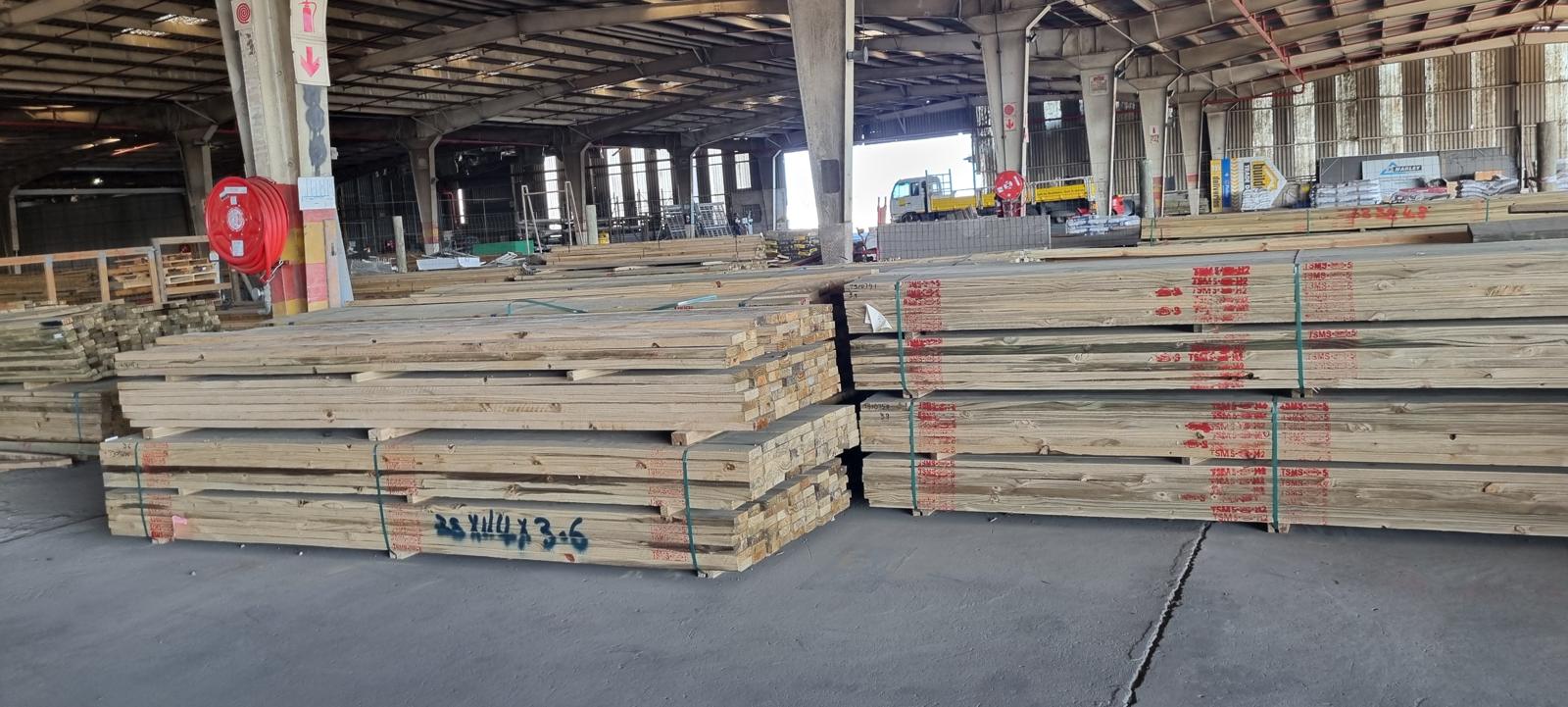
SANS 10400-L requires structural roof timber to be preservative treated in coastal areas, in line with SANS 10005, as well as in areas where termites or wood borer are a risk. Treated structural timber protects the trusses against insect attack and decay for the life of the building.
At our Cape Town plant, trusses are pressed from SABS-approved, treated structural timber. When you get a quote, tell us how close your site is to the sea so the design and materials suit it.
Fixings and connectors
Steel is where coastal roofs usually show their age first. Ask about:
- Galvanised connectors and straps with suitable coating for the exposure.
- Sheeting fixings rated for coastal use, so they do not rust out before the sheeting does.
- Avoiding mixed metals that can corrode each other where they touch.
- Protecting cut edges and scratched coatings on site.
Choosing a covering for a coastal home
Concrete and clay tiles do not corrode, which makes them a natural choice by the sea. Their fixings and the battens beneath still need to suit the exposure.
Metal sheeting works at the coast when the coating is specified for marine conditions and the fixings match. Ask your supplier about the coating class for your distance from the sea.
Our article on choosing a roof covering in the Western Cape compares tiles, sheeting and thatch in more detail.
Keep the roof space dry
- Use an underlay or membrane where the covering and climate call for it.
- Ventilate the roof space so condensation can escape.
- Seal around vents, geysers and roof penetrations properly.
- Check the roof after winter storms for lifted tiles or sheeting.
Wind and the coast go together
Coastal sites are often the windiest too. Tie-downs, bracing and fixings matter even more on open ground near the sea. Read our guide to roofs and the Cape wind.
Coastal towns we supply
Our Cape Town plant delivers trusses across the coast, including the West Coast, Somerset West and the Helderberg, Hermanus and the Overberg, and the Garden Route towns of Mossel Bay, George and Knysna. See also our guide to roof trusses in Cape Town.
Frequently asked questions
Do roof trusses need to be treated at the coast?
Yes. SANS 10400-L requires preservative-treated structural timber in coastal areas, in line with SANS 10005.
Which roof covering lasts longest near the sea?
Concrete and clay tiles do not corrode, so they are a common choice. Metal sheeting also works when its coating and fixings are specified for marine exposure.
Why do roofs near the sea rust?
Airborne salt settles on metal fixings, connectors and sheeting and speeds up corrosion. Using coatings and fixings suited to the exposure, and protecting cut edges, makes a big difference.
Do you deliver roof trusses to the West Coast and Garden Route?
Yes. Our Cape Town plant delivers across the Western Cape, from the West Coast to the Garden Route.
Build a coastal roof that lasts
Tell us where you are building and we will design the roof for the conditions. Send your plans for a free design and quote, or contact the Cape Town plant directly.
